


RN to BSN
The RN to BSN program is designed for currently licensed Registered Nurses who seek to expand their professional roles, strengthen leadership and critical thinking skills, and enhance their contributions to healthcare organizations and communities.
This degree‑completion program builds upon the clinical education and professional experience previously obtained through RN licensure, emphasizing baccalaureate‑level competencies in leadership, population health, nursing research, informatics, and healthcare systems. The curriculum prepares graduates to apply evidence‑based principles, quality improvement strategies, and interdisciplinary collaboration within the scope of professional nursing practice.

Move your career forward without putting your life on hold.
Expand Your Clinical Influence with a BSN from Aurnova University
The RN to BSN program is an online degree-completion program designed for licensed registered nurses seeking to advance their clinical knowledge, leadership skills, and professional opportunities across diverse healthcare settings.
Applicants must hold an active, unrestricted RN license, graduate from an ACEN-accredited associate degree or diploma nursing program, have a minimum cumulative GPA of 2.75, and be at least 18 years of age.
Apply to the RN to BSN Program Today
No Application Fee!

Program Structure
Students entering the RN to BSN program may transfer up to 60 credits from an associate degree or diploma in nursing and complete an additional 60 credits at the baccalaureate level to meet the 120 total credits required for graduation.
The program is structured to provide both foundational knowledge and advanced nursing competencies:
- General Education Courses (24 credits)
Students may transfer in general education coursework that supports a well-rounded academic foundation. - Nursing Core Courses (24 credits)
Focused on advanced clinical practice, leadership, and evidence-based nursing. - Specialized Track (9 credits)
Offers targeted learning in an area of professional interest or workforce demand. - Capstone Project (3 credits)
A culminating experience that integrates knowledge and skills into a practical, real-world project.
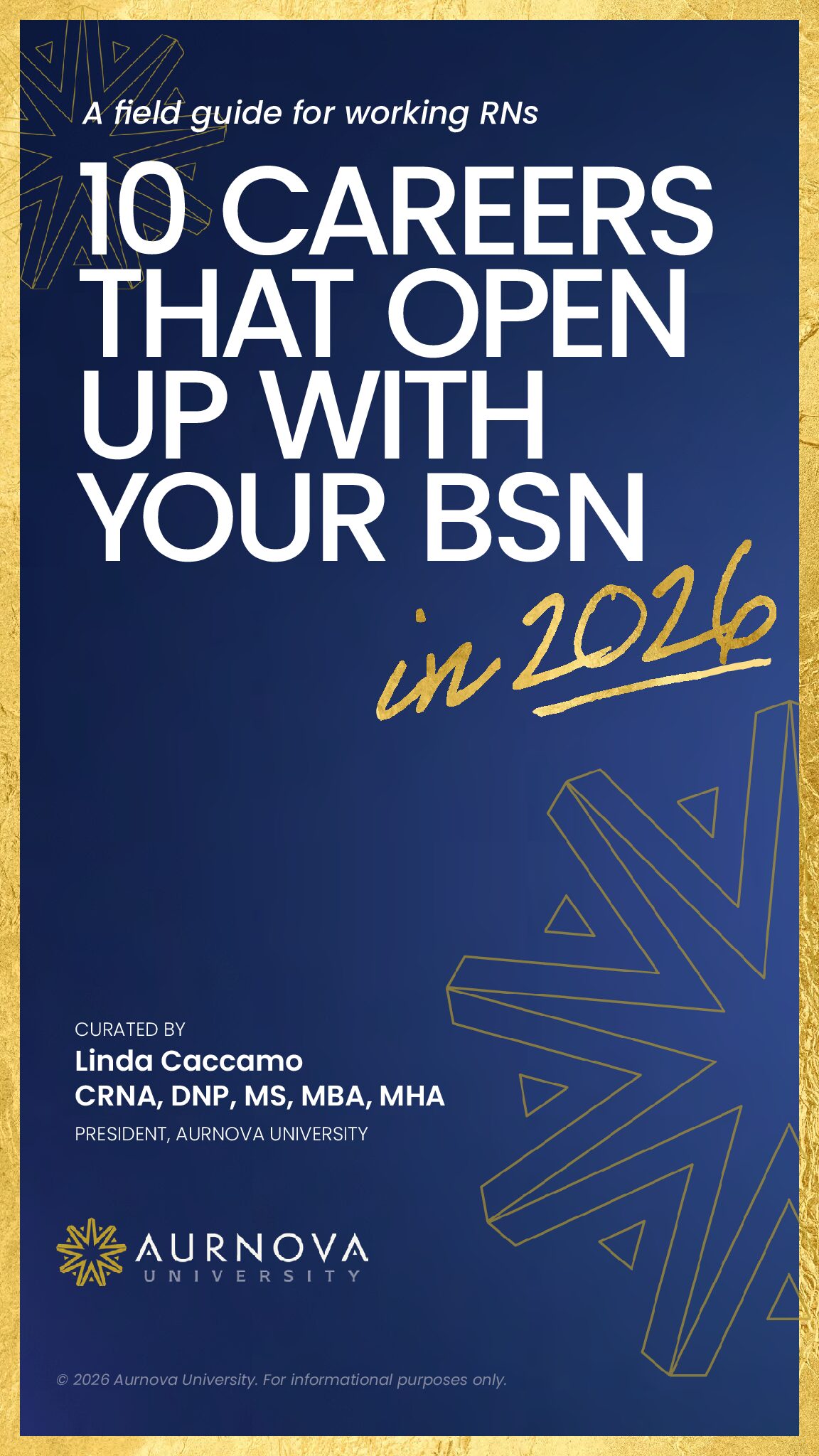
You already know how to be a nurse.
This 10 Careers that Open Up with Your BSN guide shows you where the degree takes you next, and how to keep from getting stuck!
Simply fill out the form below and we’ll provide instant access to download this insightful guide.
Recieve this free field guide for working RNs!
Program Objectives
- Design competent, patient centered professional nursing care for individuals, families and populations across the health continuum in a variety of community- based settings and institutions, emphasizing patient safety.
- Integrate knowledge from the physical and behavioral sciences, and informatics into professional nursing practice.
- Demonstrate cultural competence in providing care and working with others.
- Implement health promotion and disease prevention plans for individuals, families and populations.
- Use critical thinking and evidence-based practice and research findings in professional nursing practice.
- Demonstrate ethical and professional nursing roles, values, social justice and human dignity.
- Incorporates evidence-based practice in the provision of professional care to individuals, families, aggregates and communities.


Admissions Requirements
Applicants typically need:
- Clear/active, unrestricted, unencumbered RN License
- ASN or diploma and have completed 30 credits of required BSN prerequisite courses.
- Minimum overall college GPA of 2.75.
- Official transcripts from all prior colleges and universities.
Ready to Get Started?
Contact one of our representatives today for more information about admissions requirements, tuition & aid, and more!